
Rules you didn’t know were in the road code
Last week I completed my Competency Based Training and Assessment to obtain a restricted motorcycle licence. I passed with just four errors (you can have up to 25, or one big one) in no small way due to having read the New Zealand Motorcycle Road Code in the weeks prior to the test. I also asked for tips in a motorcycle Facebook group, and was concerned to hear that a few things riders failed on weren’t in the motorcycle road code book, or they were but only briefly, and without those tips I would have failed my test within a few minutes of it starting.
While I’ve only been riding a motorcycle for a short time, I’ve been driving a car for around 25 years. I passed my theory test in the UK with 35 out of 35, then had to take it again in New Zealand, scoring 35 out of 35, then more recently took it again for a motorcycle learner licence, frustratingly scoring 34 out of 35 (if you want to know the question I got wrong, I’ll tell you in the comments).
So with many years of driving behind me – in two different countries – and a combined theory test score of 104 out of 105, I thought I would have no trouble with the road rules on my motorcycle test and it would just come down to basic handling. But when I started reading the road code prior to my test date and chatting to other motorcyclists – finding out what they failed on – I realised I had more learning to do!
With that, I’ve put together the top road code rules that, while official, might not be so easy to find in the New Zealand road code book or online. These mostly apply to car drivers as well as motorcycle riders.
Be sure to add your input in the comments and look me up on Instagram at @motolincoln, YouTube at @motolincolnnz, and TikTok at @motolincoln.
- Moving forward into an intersection
- Don’t block intersections while waiting in traffic
- Turning into your lane
- Using a flush median before merging
- Can you cross a solid white line?
- Motorcyclists can ride in a bus lane
- You can pass on the left (undertake)
Disclaimer: These rules apply to New Zealand and – from when I remember – probably the UK amongst others. I’m not a professional driving instructor and this information is intended as a guide only. I recommend you do your own research by purchasing an official road code guide or reviewing official government information.
1. If turning right at traffic lights with oncoming traffic, move forward to wait… but not if another car is waiting ahead of you
Waiting to turn right at regular (non-green-arrow) traffic lights is usually pretty straight forward, but occasionally you end up behind the one driver who – when the lights turn green – doesn’t roll forward into the intersection ready to turn right and instead stays at the lights.
If oncoming traffic is heavy, what will likely happen is that the lights will start to turn back to red and the driver in front of you will either have missed their chance, or they’ll floor it at the last minute – just as it’s changing back to red – and you’ll have to wait for the next light cycle. Being in a situation where only one car can pass through every change of the light is more than a little frustrating.
(And extra ‘egg of the day’ points for the car that rolls forward to wait, then doesn’t take their chance and the lights change back to red while they’re still sitting in the middle of the intersection! This is even allowed for in the road code – if you’re in the intersection you can complete the turn “even if the light is no longer green by the time you get to turn.”)
But this rule isn’t quite about that situation. It’s about you not being allowed to roll forward into the middle of the intersection if there’s another car in front of you who has already done so.
That was a surprise to me. If it’s a large intersection with a lot of space, it seemed to make sense that at least two cars could comfortably sit in the middle, waiting to turn right. If the lights start to change, the oncoming traffic slows to stop at their lights, and there’s enough time for both vehicles to turn and clear the intersection. But apparently that’s against the rules!
The road code states that the first vehicle should move into the middle of the intersection, waiting to turn right, but the second vehicle must wait at the lights. Once the first vehicle can take their turn and is clear, the second vehicle moves into the intersection.
It does make sense – if you’re that second vehicle then, while 9/10 times you can get through easily, you’re fully reliant on the first vehicle to take their chance promptly as soon as they can, but the reality is you often find people who will hesitate, and that means you’re now very much in their hands, stuck in the middle of the intersection when the lights turn red.
Where is it in the road code?
In ‘The official New Zealand road code for motorcycling’ 2023 edition (I believe this is the latest) on the bottom of page 132 in a section regarding not blocking intersections: When turning right at traffic lights you can enter and stop in the intersection, as long as there are no other cars already waiting to turn right.

In the image, imagine you’re behind the red car. The red car can move to wait in the middle of the intersection for a gap in oncoming traffic (blue car and anyone following) but you can’t also move forward to wait behind the red car. Instead, you need to wait at the lights until the intersection is clear.
2. When in slow or stationary traffic, don’t block intersections or pedestrian crossings
I’ve always done this as a matter of courtesy, even sometimes easing off the accelerator in slow-moving traffic to allow a gap to appear so that others waiting to turn across me can go (and I’ve seen people say not to give up your right of way as unexpected driving can cause an accident, but that’s just not a blanket policy you can apply – it’s OK to be courteous to other drivers in the right circumstances and can massively ease congestion bottlenecks).
But while I do this anyway, I didn’t realise it was an official requirement within the road code. Because it’s officially in there, it’s something that could count against you in a licence test… albeit likely only if it’s stacked with other faults and driving/riding issues. The CBTA guide does mention that you should be seen to show courtesy to other road users, and it wouldn’t say that if the intention was you staunchly followed the rules no matter what.
All of this is referenced separately to a box junction – which at first I thought the rule and image were showing. A box junction does state that you can’t enter unless your exit is clear, but it seems this is a more visual reinforcement of the regular intersection rules, and also extends the rules to other scenarios when required, for example to stop any vehicles entering an intersection to turn right at traffic lights if it’s a more dangerous situation than normal.
As for the pedestrian crossing, we’ve all seen those internet videos where a vehicle is stopped in the middle of the pedestrian crossing and some hero walks across their bonnet.
Finally, this same rule is also applied to railway crossings. But if you think it’s OK while in traffic to sit and wait on a railway line then… perhaps you should refrain from driving…
Where is it in the road code?
Like the first rule above, this rule is also in the ‘The official New Zealand road code for motorcycling’ 2023 edition page 132 and you can also find it on the NZ Transport Agency Waka Kotahi website here.

“In this illustration, vehicle A must not go into the intersection because there’s no space on the other side of the intersection. Vehicles B and C can go into the intersection because there’s enough space on the other side of the intersection.”
3. When turning through an intersection, you need to turn into your lane (and motorcyclists need to stay in their section of that lane)
Once you know this rule it seems reasonably obvious and something that you should always do… BUT SURPRISE! Barely anyone else is following this rule because they either don’t know it, don’t care, or they’re now like you and know the rule but can’t put it into practice for fear of causing a collision!
The rule is that as you’re turning at an intersection you need to turn into your own lane, not cross lanes through the intersection. It sounds obvious, but now put that into practice in either a very tight turning inside lane (looking at you, right-hand lane turning from Montreal St to Bealey Ave in Christchurch)…

… or when you moving forwards and turning right into your lane correctly only works if the approaching car also turning into that road knows the rules and stays in their own lane. Because if they don’t, they’re either going to slam on the brakes and look at you like you’re the idiot, or they’re going to hit you…

I made this video recently to show the importance of aiming for ‘the window’ in white line when turning at an intersection, and how it could be an easy way to fail your test if you touch this line. Towards the end of the video I also show another version of turning into a lane – this was where I was turning onto a road with a 100 km/h speed limit and so it had a separated short lane to allow for turning traffic.
This all seems to be one of those rules that everyone knows when it’s mentioned in your local community Facebook Group, and yet it’s rarely employed in the real world due to the lack of confidence that everyone else is going to follow that rule. I remember when a colleague was pulled over by the police for breaking this rule. She was given a warning at the side of the road, but even throughout that warning and in the time afterward, she still had no idea what rule she’d broken.
In addition to this turning rule, motorcyclists need to know that they also have to stay in their current section of the lane, so if they leave the lights on the right side of their lane, they need to enter the lane at the end of the turn in the right side of that same lane.
Where is it in the road code?
Pages 86 and 87 of ‘The official New Zealand road code for motorcycling’ 2023 edition detail how to use lanes correctly, and it’s on the NZ Transport Agency Waka Kotahi website here but for motorcyclists the part about staying in your section of the lane as you make the turn can be found in the ‘important’ box on page 81: When turning, keep to your position on the road. For example, if you’re on the left-hand side of the road, you must stay on the left-hand side of the road after you’ve turned… [and vice versa].

In the image above, the motorcycle must turn into the closest lane to it and also turn into the same position of the lane.

In the image above, both A and B can go but must stay in their lane. In reality, B is likely going to be hesitant in case A turns into B’s lane, because A is not aware of the rules or doesn’t care. Likewise, if B is already most of the way through their turn, A can go – in theory – but it’s quite possible that B will be turning into A’s lane. Good times all round.
4. You can stop on a flush median to wait for a gap in traffic
Some roads have a flush median strip – an area in the centre of the road with white diagonal lines within parallel white lines.
To the uninitiated, it may look like you’re not supposed to enter these areas, but they have a much more strategic use designed to help with traffic flow, typically allowing vehicles to exit the main flow of traffic so that they can wait for a gap to make a turn, allowing the traffic to continue to flow past without being held up.
My personal experience of this was when I used to work at PlaceMakers on Cranford Street.* The carpark is alongside a wide and very busy road. If you were to leave the carpark to turn right, you would be waiting for a very long time for both directions of traffic to have a comfortable gap at the same time. A white median strip in the centre of the road allows you to break the road up into two. With effective use of the median strip, you can now wait for the closest lane of traffic to be clear before turning into the median strip – as if the strip was its own lane – and then wait in the median strip for the lane to the left of you to be clear so you can accelerate and then merge into the lane. In this manoeuvre, you would first be indicating right out of the carpark before turning into the median strip, and then while waiting in the median strip – now parallel to the traffic – you would be indicating left to change lanes into the main lane.
This also works when you’re on the main road, looking to turn right into a side street or carpark. Instead of slowing and even stopping in the main lane – forcing the traffic to stop behind you while you wait for a gap to turn right – you can indicate right and ‘change lanes’ into the central median strip, then wait for a gap in oncoming traffic before completing your turn.
*Funnily enough, they started with a median strip and it worked great if everyone knew how to use it, but in Christchurch that’s a big ask. In the end, they replaced it with raised ground to force people into specific turning lanes. You can see that on Google Maps here.
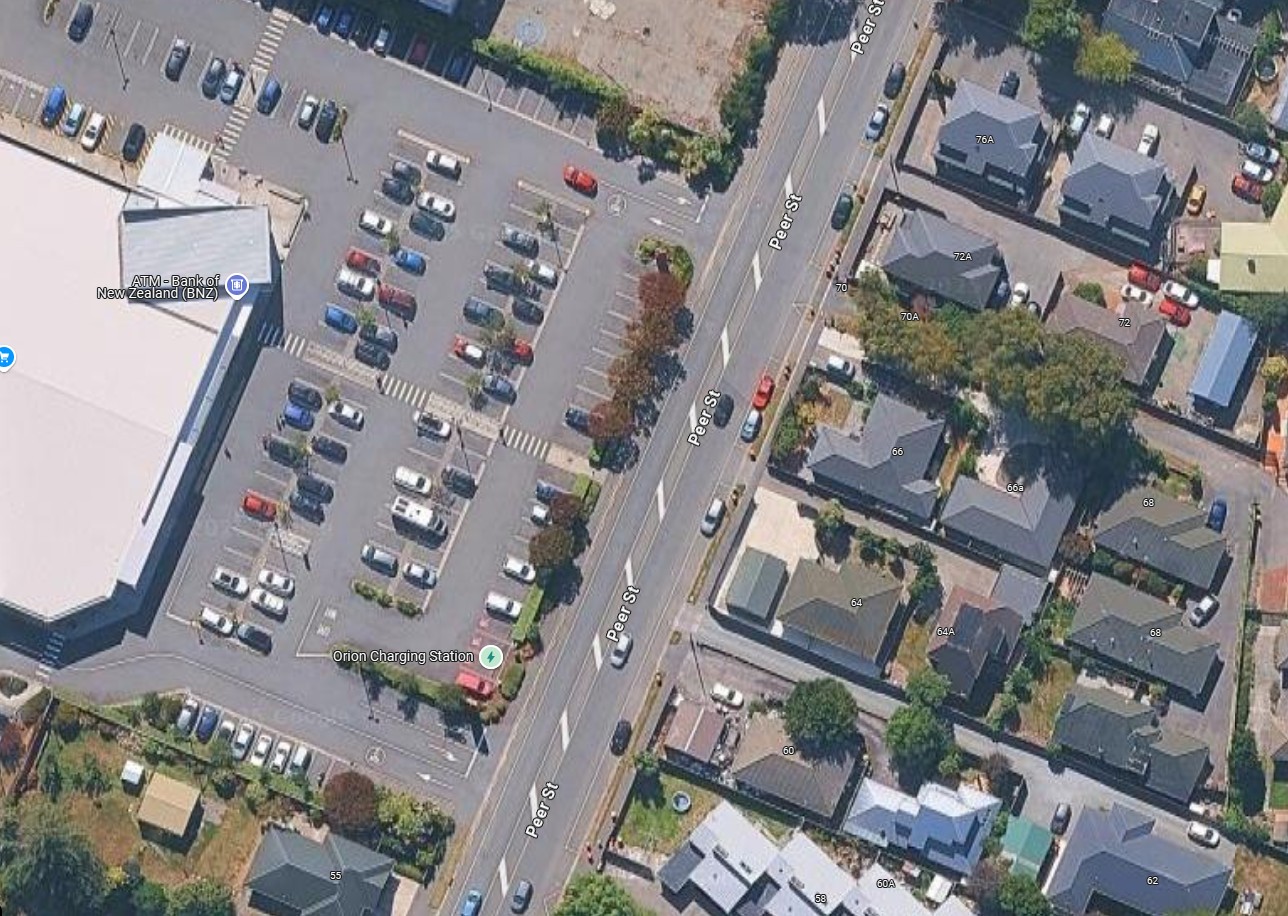
You’ll often find a flush median strip outside large shopping malls and supermarkets due to the amount of turning traffic and the often-busy lanes. The above is this road in Christchurch.
Can you use the median strip for overtaking?
Almost always not. You can use the median strip for overtaking if you’re passing a cyclist, however. Weighing up the safety of the situation, it’s better to use the media strip than try and squeeze past a vulnerable cyclist while trying to stay entirely in the lane.
Where is it in the road code?
Page 84 of ‘The official New Zealand road code for motorcycling’ 2023 edition has the use of a flush median to help with turning, “a flush media is a strip in the centre of the road marked with white diagonal lines within parallel lines. It’s a place for vehicles to wait safely before turning right off the road, or after turning onto the road,” and it’s on the New Zealand government’s official ‘Drive’ website here, with the overtaking part here.

The government’s official Drive website shows the use of a flush media to assist with turning right on a busy road.
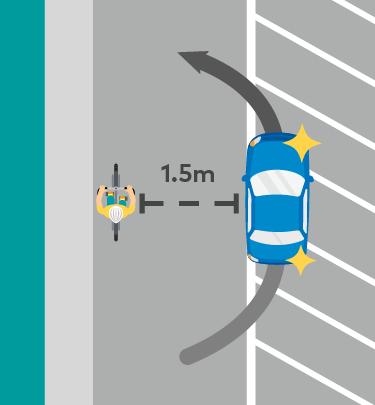
In this image, the government’s official Drive website shows you can enter a flush median to pass a cyclist to ensure a minimum 1.5 metre distance between you and the cyclist, but otherwise it is illegal to use a flush median for overtaking.
5. You can cross a solid white line… under caution
I was almost today-years-old when I was watching a POV video of a popular scrambler motorcyclist riding near Nelson, New Zealand (shoutout to @db_sevenmoto) and saw a comment from another user saying that the motorcyclist was illegally crossing the solid, centre white line.
At the time, I thought the commenter was possibly correct, after all, it was on a winding road and it was obviously safer not to cross the solid white line under most conditions, but the author of the post replied to point out that it was perfectly legal to do so. (If you watch their other videos, you can see why he did his research on this one!) In the video, they were passing much slower moving vehicles – a campervan in this case – and maintaining safety while doing so.
So, I looked it up and the truth is that it isn’t specifically illegal to cross a solid white line, it’s just generally advised to avoid doing so or at least exercise plenty of caution. This type of rule encourages vehicles to stay in their lane in riskier areas of the road but allows for situations like regular vehicles passing slow-moving traffic. You may be someone who says they’re against crossing a solid white line when commenting in social media, but in the real world you’d be ready to change your mind when stuck behind a caravan on a steep hill.
The road code goes on to warn that if you cross a solid white line and are in an accident, whatever authorities are reviewing the accident – the police, insurance, etc. – may look a lot less favourably on you for crossing a white line.
This is distinctly different to a solid yellow line. If there’s a single solid yellow line in the centre of the road, you can’t cross it. For motorcyclists, there’s some good support for being able to overtake a vehicle in the same lane, even when the centre of the road has a solid white line, as long as there’s space for you to pass the vehicle without crossing the yellow line. You can see this on page 95 of The official New Zealand road code for motorcycling 2023.
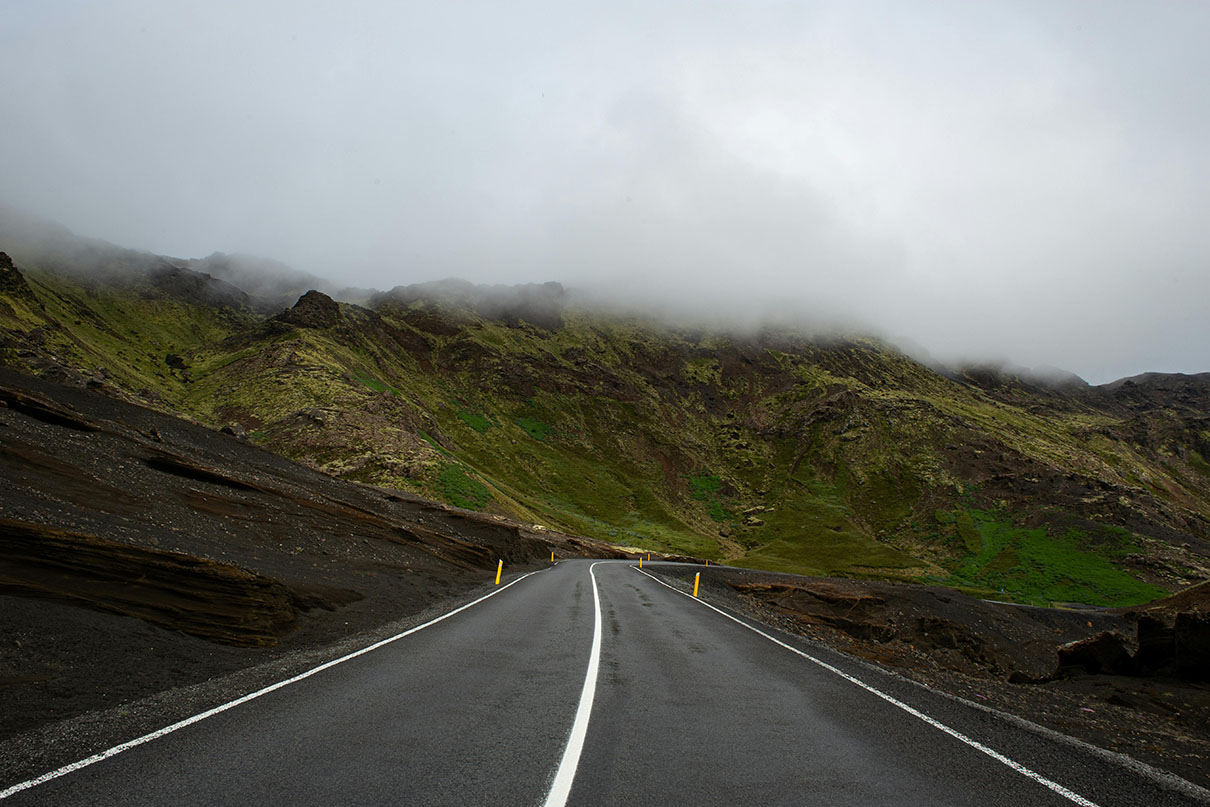
The above photo shows a solid white centre line on a curvy mountain road. It’s recommended not to cross the centre line as it shows that caution should be taken, but it’s not illegal to do so in itself.

In this photo that I took near Queenstown, if you’re travelling on the left away from the camera you can pass the dotted-white centre line to overtake if it’s safe to do so. Oncoming traffic has a solid yellow line on their side of the road, so they are not permitted to cross it to overtake. If that lane was wide enough for a motorcyclist to safely pass a car, it is OK for them to do so, as long as they don’t cross the yellow line.
Important note: you cannot overtake a vehicle when passing an intersection.
Where is it in the road code?
Pages 94 and 95 of ‘The official New Zealand road code for motorcycling’ 2023 edition detail demonstrate the rules around a solid yellow line, but information about crossing a solid white line is much harder to find. The official Drive website avoids talking about a solid white line in its overtaking section completely. I think this is because the safest information is that it’s generally advised not to cross, and no one really wants to be seen saying that you can cross it just as it’s very dependent on the exact situation and conditions. Elsewhere, Darren Cottingham – creator of the Driving Tests website (not an official government resource, but looks to be pretty well researched), has more detailed information here.
Update following your comments
In the comments on this article, Matt has pointed out that I’m referring to the yellow line as a ‘no-crossing’ line but it’s more accurately called a ‘no-passing’ line. This is because you can cross the line when turning, as shown here. Given that correction to the name, it’s then a little awkward to confirm that actually you can also cross a solid yellow line when passing a cyclist. There’s no record of this in the NZTA’s page dedicated to passing, but there is a precedent set by a lady in Governors Bay who was ticketed by a police officer for crossing a solid yellow line when passing two cyclists, as shown in this Stuff article. The police officer was wrong, the lady was right.
So, similar to the use of a flush median strip, you can cross a solid yellow line to pass a cyclist if it’s safe to do so.
6. Motorcyclists can ride in a bus lane
Hands-down, this is my favourite rule when it comes to riding a motorcycle in New Zealand. Motorcycle riders can legally use a bus lane, which never fails to put a smile on my face when I’m passing a long line of traffic in the main lane.
However, you need to be clear about the difference between a bus lane and a bus only lane. The latter is exactly what it says on the tin, buses only. But if the sign only has ‘bus lane’, including if it has an image of a bus, then motorcycle and scooter riders can use it as well.
Note: While using a bus lane legally as a motorcyclist, you might find yourself stopped at a traffic light. The red light may still be on for cars in the main lane, but a white ‘B’ light may come on, intended to act as a green light for buses in the bus lane. The road code states that this also acts as a green light for motorcyclists that are legally using the bus lane, so you’re good to go.
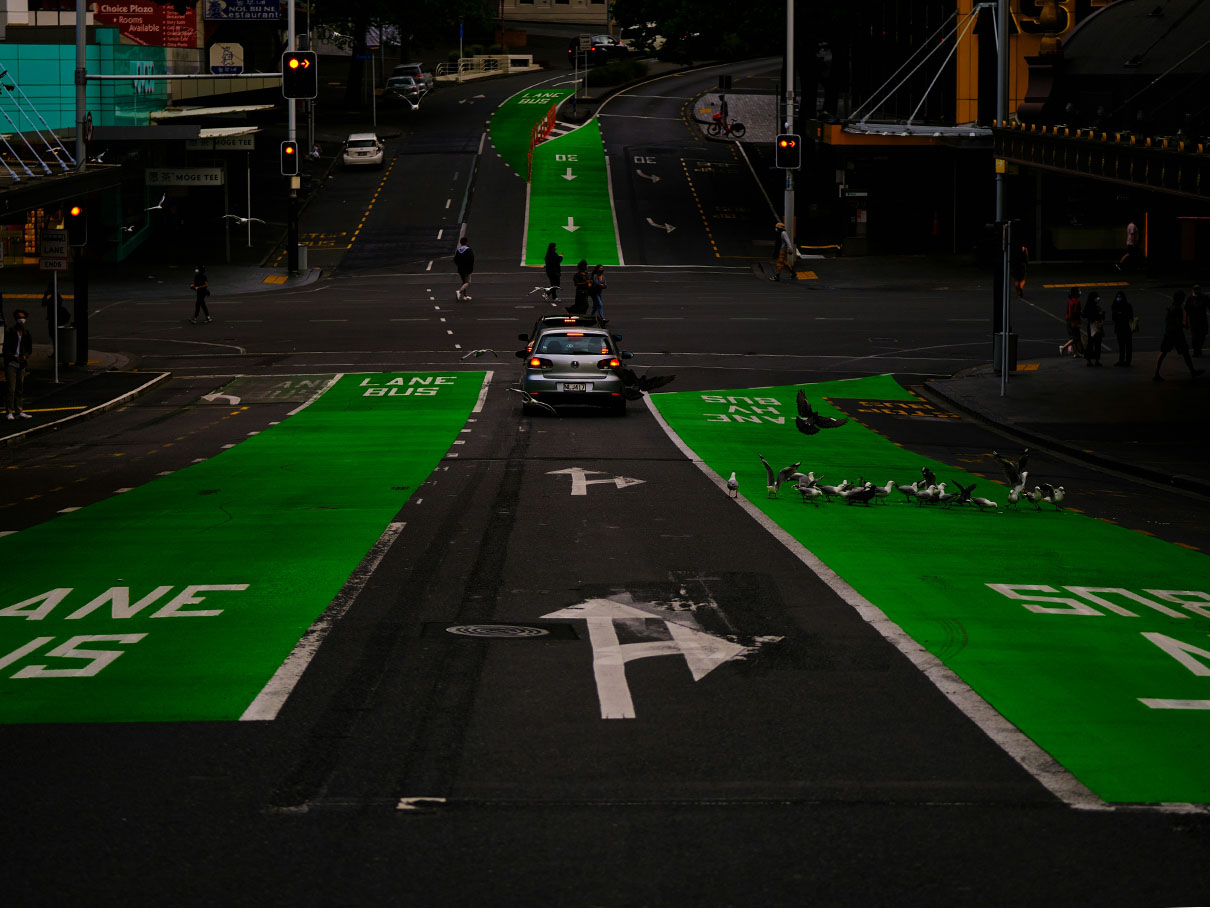
Obviously just because motorcyclists can use a bus lane, it doesn’t mean that you should tear up it at dangerous speeds. Traffic entering from side roads to the left may not expect you to be in that lane, and traffic coming from the right across the main lane and then the bus lane may also not expect you to be there and could also have their view obstructed by traffic in the main lane. They may also only be looking for a large bus, not a small motorcycle, so proceed with caution.
Bonus: motorcycles can also use transit lanes, e.g. ‘T2’ and ‘T3’ lanes. While these may be designed to encourage cars to carry more than one passenger to aid congestion, it’s widely accepted that motorcycles do a whole lot less to cause congestion in the first place. They also use less fuel than cars. So don’t get upset next time you see a motorcycle in a transit lane.
Where is it in the road code?
“A bus lane is a lane reserved for buses, cycles, mopeds, and motorcycles, unless some of these latter vehicle classes are excluded by markings and/or signs.” Read more here.
7. You can pass on the left (undertaking)
This is a controversial one as it’s one of those rules that seems to be fairly unique to New Zealand, especially when compared to the UK. It also isn’t well known, with a recent discussion in a Facebook Group exposing a lot of people with opposing arguments, some of those having driven in New Zealand for many years without knowing this.
But it’s true. You can pass a vehicle on the left, also known as an undertake, in a multi-lane road.
One reason it’s not especially well known as it’s not exactly one that the police, NZTA, or any other motoring authority would want to remind people of. That’s because it’s just not as safe as passing a vehicle on the right – overtaking. It also doesn’t help that if you Google this question, most of the answers – including AI at time of writing – are in relation to while riding on a bicycle. This doesn’t help many Facebook arguments. That and the NZTA website has some bullet points that I’ve seen people use as ‘AND’ statements, which doesn’t work.
Obviously, the preferred scenario is that slower moving vehicles keep to left lanes unless passing. That is often promoted as a reminder, but it’s not a rule that I find many New Zealanders are keen to abide by. After all, the left lane is for slow-pokes, right? Yeah, nah. On a quieter road, if we all stayed in the left lane unless passing then our roads would be a safer place. But sadly many people think they need to go faster than others, so they stick to the right lane.
The road code specifically states that it is OK to pass on the left if it is safe to do so. It’s a strange one as this rule pretty much shows that authorities accept that people aren’t following another road code rule, to keep left.
Q. Is it a requirement to keep left or just a guideline? A. It’s the law.
Breaking down the terminology of the Land Transport law
At first glance, it would be easy to believe that you can’t pass a vehicle on the left in New Zealand. The opening language seems quite firm on this page of the Land Transport (Road User) Rule 2004 in relation to passing on the left:
“A driver must not pass or attempt to pass on the left of another vehicle moving in the same direction except in accordance with this clause.”
That ‘clause’ effectively includes any multi-lane road – a road where there are two or more lanes travelling in the same direction – such as when you’re on a larger motorway.
As the law then goes on to elaborate:
“the 2 vehicles must be in different lanes…”
And then…
“If the roadway is marked in lanes, the driver may make the movement referred in subclause (1) [passing on the left] only if the driver’s vehicle does not encroach on a lane that is unavailable to a driver.”
i.e. don’t use the hard shoulder or a lane you’re otherwise not able to use, for example a bus lane if you’re in a car, or a T2 transit lane if there’s only one of you in the car, etc.
Why is it safer to pass on the right?
In New Zealand, where we drive on the left and site in a driver’s position on the right side, it’s much safer to overtake a vehicle on that vehicle’s right as the right side of a vehicle has a much smaller blind spot zone than the left side of a vehicle. As you pass a vehicle on its right, you’re in that blind spot for less time than if you were passing it on the left.
What do they do in the UK?
In the UK it’s illegal to pass a car on its left, so for that reason more drivers either know that they need to keep left, OR the ones that do stay in a right lane when there’s a clear lane to the left of them will often find themselves with a frustrated driver behind them, flashing their headlights.
If you know you can only pass a vehicle on one side, then suddenly the traffic is more predictable. If a faster vehicle is a approaching a slower vehicle from behind on the motorway, then it’s fairly likely that the slower vehicle will move to the left to let the faster vehicle pass. In New Zealand, there’s far less of a guarantee. In fact, it seems to be more likely that the slower moving car – while sitting in the right lane – will happily stay there. You then either need to drive at the slower speed or pass the car on its left.
Where is it in the road code?
I’ve found this rule more clearly located in the Land Transport Rules here, and the NZTA website here, but the latter I’ve only found in reference to motorcycles. I’d love it if someone could find something on either the NZTA or Drive websites that specifically acknowledges this for cars in the comments below.

Passing on the left
You can only pass on the left when:
- there are 2 or more lanes on your side of the centre line and you’re able to pass safely by using the left-hand lane
- the vehicle you’re passing:
- has stopped, or
- is signalling a right turn, or
- is turning right
- you’re directed to by a police officer.
Be careful when passing a vehicle signalling a right turn, as other drivers may not see you.
At all other times, when you’re passing, you must pass on the right.
Quoted from the NZTA:
Passing | NZ Transport Agency Waka Kotahi
Also for motorcyclists: lane positioning
The day before my CBTA test, I was given a tip in a Facebook Group: you need to split the lane into three, know what position you need to be in, and check your blind spot before each position change. That was a surprise to me, but the people who mentioned this said they were failed specifically because they didn’t check their blind spot before changing positions in a lane.
I’ve put this video together to better demonstrate it.
Your thoughts?
I’ve chosen these five as they’re slightly away from the usual “give way rules at an intersection” and “how to indicate”. Instead, they stood out to me as legal rules that are in the official New Zealand road code but are lesser known, either because they didn’t stand out to me as all that obvious, or because you just don’t see a lot of drivers and motorcycle riders following these rules to the letter.
Have I missed anything important? Do you agree or disagree? Let me know in the comments and be sure to look me up on Instagram at @motolincoln, YouTube at @motolincolnhq, and TikTok at @motolincoln.
See you out there.
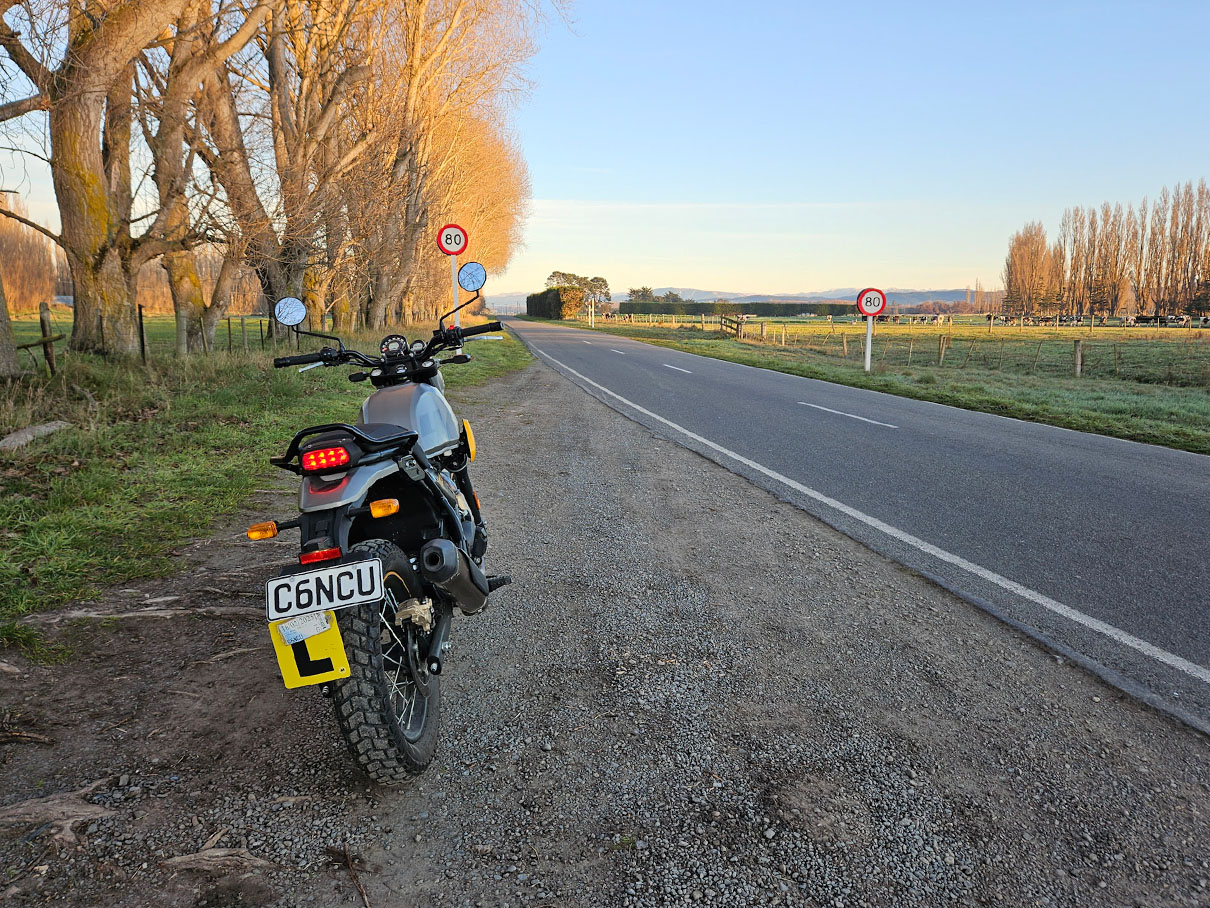
Photo credit: Hero photo of an L-plate on a motorcycle was taken by me on my very first ride on a New Zealand road as a motorcycle learner rider on my Royal Enfield Scram 411. Man, that was a cold morning but the adrenaline kept me warm! The ‘Empty Road Along a Mountain’ photo is by Mads Thomsen. The winding road near Queenstown is by me, Mark Lincoln. The New Zealand bus lane photo is Arno Retief.
 https://www.marklincoln.co.nz/wp-content/uploads/2024/07/motorcycle-basic-handling-skills-test-pass.jpg
908
1210
Mark Lincoln
https://www.marklincoln.co.nz/wp-content/uploads/mark-lincoln-logo-lobster.png
Mark Lincoln2024-07-14 18:14:352024-10-17 15:28:455 Tips to Help you Pass a Motorcycle Basic Handling Test
https://www.marklincoln.co.nz/wp-content/uploads/2024/07/motorcycle-basic-handling-skills-test-pass.jpg
908
1210
Mark Lincoln
https://www.marklincoln.co.nz/wp-content/uploads/mark-lincoln-logo-lobster.png
Mark Lincoln2024-07-14 18:14:352024-10-17 15:28:455 Tips to Help you Pass a Motorcycle Basic Handling Test https://www.marklincoln.co.nz/wp-content/uploads/2024/06/bwm-g-310-gs-lightweight-adventure-motorcycle-800x600-1.jpg
600
800
Mark Lincoln
https://www.marklincoln.co.nz/wp-content/uploads/mark-lincoln-logo-lobster.png
Mark Lincoln2024-06-24 02:51:232025-07-25 10:59:55Top 5 Lightweight Adventure Motorcycles in 2024/2025
https://www.marklincoln.co.nz/wp-content/uploads/2024/06/bwm-g-310-gs-lightweight-adventure-motorcycle-800x600-1.jpg
600
800
Mark Lincoln
https://www.marklincoln.co.nz/wp-content/uploads/mark-lincoln-logo-lobster.png
Mark Lincoln2024-06-24 02:51:232025-07-25 10:59:55Top 5 Lightweight Adventure Motorcycles in 2024/2025
RE: Point 2 and intersections. I’ve always wondered if the road code actually has it wrong here. The area defined as the intersection doesn’t terminate at the centre line. It extends across to the kerb on the opposite side of the road. “A”, “B” and the truck in the illustration should stop short of the street on their right.
RE: 4 and 5. Yellow lines are no passing lines, not no crossing lines. More specifically, you cannot cross then when passing a motor or animal-drawn vehicle. However you may cross them when passing a cyclist, or making a turn.
I stand corrected, thanks Matt! I had to Google that one but I see there was a Stuff news article about this in 2019. It’s obviously one of those rules that’s so poorly known that even the police didn’t know it in this scenario. I’ve seen elsewhere in the road code (and mention it in this post) about being able to enter a flush median to overtake a cyclist, but haven’t seen any official road code reference to crossing a no-passing line to overtake a cyclist. This page on the NZTA website is all about passing, with plenty of different scenarios referenced, but at no point do they say you can cross a yellow line to pass a cyclist. The road code needs an update.